注册或者登录即代表同意
《版权声明》《使用条款》《软件使用协议》
Registering or logging in means you
have read and agree to the
《Copyright》《Terms and Conditions》《Software Use Agreement》
Login via
注册或者登录即代表同意
《版权声明》《使用条款》《软件使用协议》
Registering or logging in means you
have read and agree to the
《Copyright》《Terms and Conditions》《Software Use Agreement》
Login via
 Xixi
19:05 15/01/2018
Xixi
19:05 15/01/2018
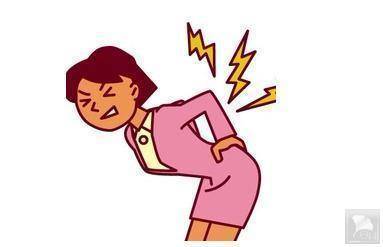
For review, click here: Eight Acupuncture Methods for Lumbar Pain (Ⅰ)
6. HX6, 7i (ear apex, Erjian) Only
Characteristics: Severe lumbar pain caused by acute contusion with a short duration.
Point selection: Select bilateralHX6, 7i (ear apex, Erjian); the right one is a must.
Treatment Methods: Perform hydro-acupuncture or point moxibustion at auricle. Performing hydro-acupuncture at HX6, 7i (ear apex, Erjian) is to inject 0.2-0.4 ml of 5% lidocaine until the local skin is swollen and pale.
7. Perform Acupuncture According to the Accompanied Symptoms
Characteristics: Lumbar pain with various accompanied symptoms.
Point selection: Point selection depends on the different accompanied symptoms. Select BL 62 (Shenmai) for lumbar pain with inability of lifting foot. LV 3 (Taichong) is applied for lumbar pain with abnormal urination. CV 7 (Yinjiao) is applied for painful spasms of low back and knees. GV 2 (Yaoshu) is utilized for lumbar pain referring to the hips with back rigidity.
Treatment Methods: Perform either acupuncture or moxibustion (see techniques in the third, fourth, and fifth methods).
8. Combination of Bilateral Points
Characteristics: Bilateral lumbar pain with the same or different severities.
Point selection: Combine bilateral points (see details of point selection in the second, third, fourth, fifth methods).
Treatment Methods: Perform acupuncture, moxibustion or point moxibustion (see details of methods in the second, third, fourth, fifth methods).
Case study
Mr. Wang, 30 years old, had suffered from lumbar pain caused by improper physical exertion for half a day. He was neither unable to bend backwards or forwards nor to turn sides. His pain was worsened by coughing and increased abdominal pressure. He was assisted to present in the clinic.
Physical examination: The patient was in passive position with obvious pressing pain of right lumbar muscles at the 4 and 5lumbar vertebrae. Straight-leg raising test and hallux dorsiflexion test were negative.
Diagnosis: Acute lumbar muscle sprain.
Point selection & treatment: Hydro-acupuncture at bilateral HX6, 7i (ear apex, Erjian) was performed by injecting 0.3-0.4 ml of lidocaine for each point until the local skin was swollen and pale. After treatment, his pain was immediately relieved, but it recurred on the second day. The same treatment was then applied 3times and the patient recovered.
2. Hyperosteogeny of Lumbar Vertebrae
Ms. Qiao, 50 years old, had suffered from lumbar pain for more than 3 years. Her pain became severer a month ago. She had limited lumbar motion which affected the left lower limb. The accompanied symptoms included numbness in the left leg and that she needed to take a short rest after walking about 10 meters.
Physical examination: She had tenderness at the left side of 4 and 5lumbar vertebrae which radiated to the left lower limb. She also had tenderness at BL 37 (Yinmen), BL 40 (Weizhong), and BL57 (Chengshan) on the affected side. X-ray examination showed that her lumbar spine was straightened and she had hyperosteogeny at the 4 and 5lumbar vertebrae.
Diagnosis: Lumbar spondylosis
Point selection & treatment: Select Ashi point combined with the local and distal points. Insert the needles into tender points at the left side of 4 and 5 lumbar vertebrae and then needle BL57 (Chengshan). Repeat the previous treatment three times and her pain was significantly relieved. Then moxibustion with fixing device the tender points at the left side of 4 and 5 lumbar vertebrae was applied for 10 times. As a result, her lumbar pain was relieved and did not recurred the 6-month follow-up.
3. Rheumatic Lumbar Myofascitis
Ms. Zhang, 52 years old, had suffered from lumbar pain for more than 7 years. The pain was aggravated by fatigue and weather change and relived by warmth. The painful was not fixed, sometimes on the left, sometimes on the right, or with pain, soreness and swelling of the right lower limb or of left lower limb.
Physical examination: Generalized pain of bilateral lumbar muscles. Blood test against “O”: 800; Erythrocyte sedimentation rate: 25mm/h;
Rheumatoid factor: negative.
Dignosis: Rheumatic Lumbar Myofascitis
Point selection & treatment: Combine points on the upper or lower limbs, back-shu point and front-mu point (with variations). The patient received treatment twice every day. In the morning, bilateral GB 20 (Fengchi), LI 10 (Shousanli), ST 36 (Zusanli), SI 3 (Houxi), and BL 62 (Shenmai) were selected. Even supplementation and drainage methods were used and needles on the upper and lower limbs were manipulated to drive to the affected area. In the afternoon, moxibustion was performed on bilateral BL 22 (Sanjiaoshu) andCV 7 (Yinjiao).The efficacy was achieved significantly after 5 times treatments and her lumbar pain disappeared after 9 times treatments. Later moxibustion was performed on CV 7 (Yinjiao) for 20 days to strengthen the curative effect. During the 2-year follow-up, she did not suffer from lumbar pain anymore.
4. Spina bifida occulta
Ms. Wang, 35 years old, had suffered from lumbar pain for many years. Recently, the pain became severer because of catching cold. The pain was located at the midline of the low back, which resulted in her inability to bend forward or backward.
Physical examination: She had an obvious tenderness at the 5lumbar vertebra. X-ray examination showed that she had spina bifida occulta between L5 and S1.
Point selection & treatment
Treating yin for yang disorders was used. Moxibustion with fixing device on CV 7 (Yinjiao) was applied for 20 minutes; the heat flowed to the painful area. After one hour the heat flow disappeared and moxibustion was stopped. After 7 treatments, the patient’s lumbar pain and local tenderness disappeared and the treatment was discontinued.
Analysis
1. When the effects of acupuncture and moxibustion on lumbar pain are compared, acupuncture is inferior because moxibustion produces more stable and long-lasting effect. Patients who receive moxibustion seldom experience relapse of the pain. Fire needling enjoys the advantages of both acupuncture and moxibustion for it leaves pinhole the same as the mark left by after moxibustion. For chronic lumbar pain caused by lumbar hyperosteogeny, inserting the needle into the tender point may help relieve the pain and stabilize the condition. Many people can feel that moxibustion sensation goes to the painful area directly when receiving moxibustion with fixing device, which shows significant efficacy and that is better than handheld moxibustion.
2. Clinical cases show that after patient receiving acupuncture, moxibustion/fire needling, the spinal cords of patients with spina bifida occulta do not fuse together and that lumbar hyperosteogeny does not subside, but the pain can be relieved. The mechanism still needs to be discussed. Some people believe that the pathological structures of spina bifida occulta and hyperosteogeny and their adjacent tissues together can produce some kind of carcinogenic substance. The relationship between those places will be changed and a new balance will be formed after fire needling or other treatments are used. Therefore, the lumbar pain can be reduced significantly or completely, though the spina bifida occulta or hyperosterogeny remained the same. The relationship needs to be further explored and confirmed.
3. Lumbar pain is one of the main signs of epidemic hemorrhagic fever, which exists through the whole pathological process of epidemic hemorrhagic fever. Dr. Zhou used four needles CV 7 (Yinjiao), GV 4 (Mingmen), bilateral BL 23 (Shenshu)) which could relieve or cure the lumbar pain immediately. These four points are also effective for lumbar pain caused by other factors, though it is not as effective as for lumbar pain caused by epidemic hemorrhagic fever. These four points indicates the use of back-shu point and front-mu point and the application of treating yin for yang disorders. Therefore, the indications of the eight methods are different from one to one and they may be weaved together.
4. Treatments for lumbar pain caused by soft tissue injury or lumbar muscle degeneration can produce quick effects with less risk of relapse after recovery; while for rheumatic lumbar pain, it produces slow effects with higher risk of relapse. These two types of conditions are commonly treated with the second, fourth and sixth methods. Unfixed lumbar pain is often treated with the second, fifth and eighth methods; while the second, fifth, sixth, seventh and eighth methods are often used for lumbar pain referring to the lower limbs. The treatment plan for lumbar pain, like those for any other diseases, is not determined as one method or one formula. The greatest characteristic of acupuncture and moxibustion is using the same treatment for different diseases. Those methods are identified for clarifying the practitioner’s mind and avoidance of hesitation in clinical practice. The practitioners’ clinical experiences vary from person to person which may affect the therapeutic effects. I learned this from Dr. Zhou.
5. Clinical application of the same method of acupuncture and moxibustion for different diseases can reduce and save many medical devices, but sometimes we also should treat the same disease with different methods to achieve better effects. Moreover, the causes of lumbar pain are numerous with complex patterns, and these eight methods are among the many effective methods. The traditional therapies such as Chinese massage (Tuina), cupping, blood-letting, external application of herbal medicine, and Chinese herbal decoctions should not be ignored. Only by applying them properly can we achieve great efficacy.
Source:《针灸临床杂志》1993年第9卷第6期。作者:魏从建周楣声(指导),编校/Alice。


当前客服:小岐
QH岐黄网客服系统
发送内容不能为空

Comments(0)