注册或者登录即代表同意
《版权声明》《使用条款》《软件使用协议》
Registering or logging in means you
have read and agree to the
《Copyright》《Terms and Conditions》《Software Use Agreement》
Login via
注册或者登录即代表同意
《版权声明》《使用条款》《软件使用协议》
Registering or logging in means you
have read and agree to the
《Copyright》《Terms and Conditions》《Software Use Agreement》
Login via
 zhenhu chen
01:32 21/06/2019
Jin’s Three Needle
zhenhu chen
01:32 21/06/2019
Jin’s Three Needle

At the Rio Olympic Games in 2016, the cupping marks on the back of Phelps and other top athletes aroused great interest and concern all over the world, which brought the cupping therapy to a new era.
Cupping therapy, also named as bamboo-cupping and horn-cupping therapies in the ancient time, was first recorded in the Formulas for Fifty-two Diseases (Wŭ Shí Èr Bìng Fāng, 五十二病方) unearthed from Mawangdui Han Dynasty (202BC-220AD) Tomb. In the beginning, cupping therapy, mainly used to draw blood and expel pus, was regarded as a method of external treatment and indicated for hemorrhoids. The term “fire-cups” was formally introduced in the Supplement to 'The Grand Compendium of Materia Medica' (Bĕn Căo Gāng Mù Shí Yí, 本草纲目拾遗) by Zhao Xuemin (about 1719-1805AD) in Qing dynasty, noting that “The fire-cups, available in Jiangxi and Fujian provinces, are made and sold by the potters. They are thumb-sized, big in the middle and narrow in both ends, which helps keep fire in the cups before applying cupping therapy. They are indicated for all wind-cold patterns.” It shows that the cups were mainly made of pottery at that time. The shape of big center and small opening contributed to forming negative pressure from fire in the cup, which was for sucking on the skin. It is used to treat externally contracted wind-cold pattern and other exterior patterns. Cupping therapy has been widely used due to its simplicity and convenience in operation, safety, and non-invasion. It is often used in combination with acupuncture and moxibustion in clinical practice to strengthen the therapeutic effects.
Unlike acupuncture which requires point-selection along the meridians to treat diseases, cupping therapy can cover several points at one time due to its large effective action area. So the combined effect on the cutaneous regions is more likely to be considered. The twelve cutaneous regions are where the functional activities of the twelve meridians manifest and where the qi of collateral vessels diffuses. Chapter 56 of the Basic Questions (Sù Wèn, 素问·皮部论第五十六篇) notes that, “The cutaneous regions are related to the running of the meridians. The same is true of all the meridians.” The twelve cutaneous regions locate in the outermost layer of the human body and connect with qi and blood of the meridians, thus they are the defensive barrier of the body, playing a role in protecting the body, defending against the external pathogens and reflecting the diseases. Namely, the disease patterns of the zang-fu organs, meridians and collaterals can be reflected by the corresponding cutaneous regions of human body, and can also be prevented and treated by stimulating the relevant cutaneous regions. Cupping therapy has the following functions.
1. Unblock the meridians and collaterals
By stimulating points on the cutaneous regions, cupping therapy can boost qi and blood of the meridians, unblock the meridian qi and promote qi and blood to nourish the zang-fu organs. According to Chinese medicine theory, the harmony and normal circulation of qi and blood are the foundation of functional activities of all the zang-fu organs. Once the abnormal qi and blood circulation leads to the dysfunctions of zang-fu organs, the pathological changes appear, which suggests obstruction and then pain. Cupping therapy has the functions of harmonizing qi and blood and promoting the circulation of qi and blood. Meridians and collaterals are pathways for qi and blood circulation. By stimulating and unblocking the meridians and collaterals, the functions of zang-fu organs are restored. That is why it is said that cupping therapy can free the meridians and vessels, harmonize the zang-fu organs, and ensure no pain.
2. Reinforce healthy qi and eliminate pathogenic factors
Initially, cupping therapy was mainly used to remove stasis and expel pus; later, it has been applied extensively to expel wind, release the exterior, dissipate cold and eliminate dampness. Cupping therapy is indicated for some externally contracted exterior patterns and joint pain and impediment due to pathogenic wind, cold and dampness. Take cough due to externally contracted wind-cold for example, pathogenic wind invades the lung, resulting in the failure of lung qi diffusing and downbearing and causing lung qi ascending reversely, manifested with coughs. This can be treated by applying cups on BL 12 (Fengmen), BL 13 (Feishu) and other points on the back to expel wind, release the exterior, regulate qi, suppress cough and boost healthy qi to strengthen the body resistance, which drives the pathogenic qi away from the body and help healthy qi be settled. If the healthy qi is sufficient, pathogens cannot invade the body. Cupping therapy has shown significant clinical effects on such cases.
3. Regulate yin and yang
“Yin and yang serve as the Dao (law) of the heaven and the earth (from Chapter Five of the Plain Questions (Su Wen).” “Only when yin is at peace and yang is at compact can essence-spirit be normal (from Chapter Three of the Plain Questions (Su Wen).” These state that the coordination and balance of yin and yang are essential for normal life activities of human body. Disharmony of yin and yang is the primary cause of diseases. So, regulating and restoring the balance of yin and yang are the key to treatment. Alarm points, located on the abdomen, are yin. Transport points, located on the back, are yang. It is by applying cups on alarm points and transport points that cupping therapy can treat yang for yin conditions, and vice versa, thus excessive/deficient condition of yin/yang can be corrected. Once yin and yang are balanced, health is restored.
From the perspective of modern medicine, cupping therapy means that cups absorb on the skin by means of negative pressure and pull the nerves, blood vessels, muscles and subcutaneous glands; consequently, it causes a series of neuroendocrine reactions, regulate the vasomotor function and permeability of blood vessels to promote local angiotelectasis, which helps accelerate blood circulation, improve metabolism and promote the recovery of lesions.
- Indications
Cupping therapy is widely used by the common people due to its simplicity and convenience in operation, safety and efficiency. According to records, the indications of cupping therapy vary up to 52 types, involving internal medicine, surgery, gynecology and pediatrics. Cupping therapy is indicated for common cold, fever, acute or chronic bronchitis, impediment and pain due to wind-dampness, facioplegia, chronic fatigue syndrome, acute/chronic pain like abdominal pain, muscle soreness and pain on waist and back, headache, dizziness, constipation, dysfunctions of defecation and urination and other zang-fu disorders. Cupping therapy can also be applied for furuncle, abscess, subcutaneous ulcer, erysipelas, hemorrhoids, venomous snake bites and so on. The indications for gynecological diseases include irregular menstruation, dysmenorrhea, leukorrheal diseases, amenorrhea, pelvic inflammation, climacteric syndrome, etc. The indications for pediatric diseases include fever, food accumulation, indigestion, diarrhea, cough, mumps, tonsillitis, etc. Besides; it can be used for dermatosis, ophthalmological and otorhinolaryngological diseases, such as neurodermatitis, eczema, urticaria, acne, senile pruritus, herpes zoster, skin pigmentation and other looking-relation issues.
- Function mechanism
The twelve meridian sinews and the twelve cutaneous regions are where qi of twelve meridians infuses on the body surface, among which the twelve meridian sinews are interiorly located, connecting the sinews, muscles and joints, and the twelve cutaneous regions are exteriorly located and where qi of the collateral vessels diffuses on the body surface. The meridian sinews and cutaneous regions play a vital role in ensuring the normal functions of joints and bones, protecting the body and defending against the external pathogens. Chapter 10 of the Spiritual Pivot (Líng Shū) notes “the bones as the trunk, the vessels as the nutrients, the sinews as strength and the muscles as the wall”. “The sinews as strength” refers that the muscles and sinews are attached to the bones and able to bend and stretch, manifesting strength and force. “The muscles as the wall” means that the parts filled in the body surface and the superficial parts of the limbs outside the sinews and the muscles, forming a peripheral defense against the external pathogens and preventing the vital zang-fu organs from any damage. This statement reminds us that the twelve meridians, meridian sinews and cutaneous regions are a complete and systematic whole. Only if we make overall consideration and comprehensive application when treating diseases in clinic, can the effects of cupping therapy be fully exerted.
For some refractory pain conditions, QH needles can be used to stimulate deep tissues and relax the sinew and muscle tissues effectively, which can relieve the tension and spasm, relieve pain, remove oppression, promote vasodilatation and the circulation of qi and blood. These are called “moving qi and activating blood”, “unblocking the meridians and collaterals” and “unblocking resulting in no pain” in Chinese medicine.
Acupuncture combined with cupping therapy on the local points or a group of points can strengthen the effect of freeing the meridians. Cupping only may lack of permeability, though the skin feels tight, and may not achieve the effect of eliminating wind-cold-dampness deep in the body. The combination of acupuncture and cupping therapy may help to cure the refractory and lingering diseases.
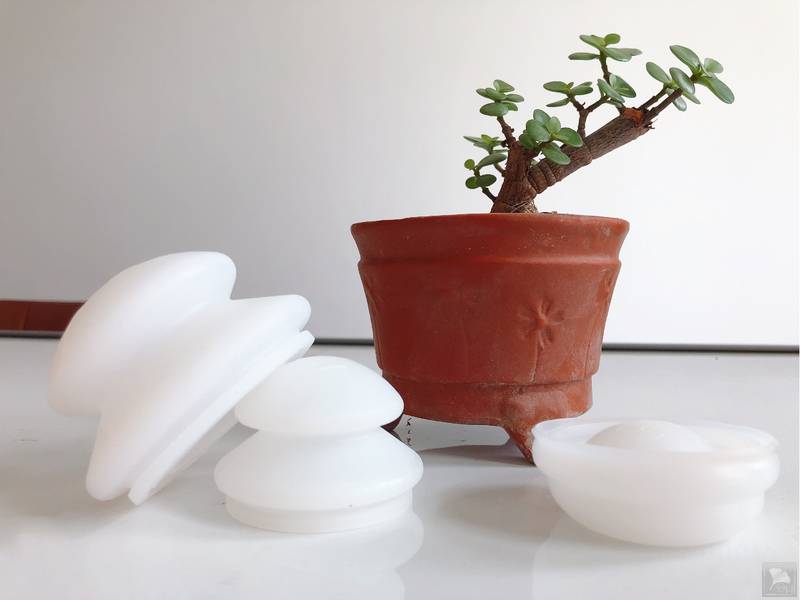
Compared with regular cups, QH-cups enjoy lots of advantages: simplicity and convenience for application, portability, breakage-proof, no involvement of fire, and affinity with the skin. However, temperature is the disadvantage. Regular cups bring heat stimulation on the local skin, which can produce local vasodilatation, promote blood circulation and accelerate metabolism. The regular ones are better at improving the local blood circulation and reducing the exudation of the inflammatory substances, thus relieving the swelling and pain. As the old saying goes, “Gold cannot be pure and man cannot be perfect.” We believe that with the advocating of natural therapy and non-medicine therapy in nowadays, cupping therapy will have a wider application prospect in clinical practice.
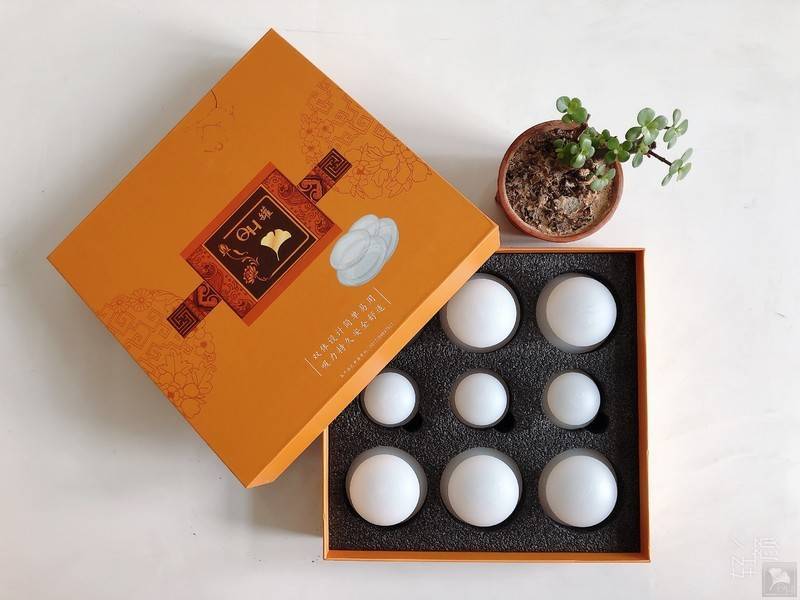
PS. QH-cups is on sale now! Click to enjoy it!


当前客服:小岐
QH岐黄网客服系统
发送内容不能为空

Comments(0)